Winter Paw Care for Maine Dogs: Salt, Ice, Snow and the After-Walk Check
On a cold morning in Glenburn or Bangor, a short walk can leave a dog with wet fur, gritty paws and a surprising amount of road salt tucked between the toes. A dog may seem eager to get outside and still need extra help when the walk is over. In Maine, winter paw care is a practical habit rather than a luxury.
For families in Glenburn, Bangor, Brewer, Hermon, Orono, Old Town and nearby Penobscot Valley communities, the combination of snow, ice, thawing slush and deicing products changes how we should prepare for everyday dog walks and trips to daycare. Here is a clear, repeatable routine that helps owners notice problems early without overcomplicating the day.
Before you go out: check the surface, not just the temperature
Look at the conditions your dog will actually cross. A path that was soft snow yesterday may be sharp, uneven ice today. Sidewalks and parking areas may contain deicing salt or other products that irritate paws if left on the skin. Snow that repeatedly melts and refreezes can leave hard edges around doorways or steps.
Check your dog's paws before leaving: look for redness, cracked pads, tender areas or material caught between the toes. If a paw is already irritated, shorten the outing and ask your veterinarian about persistent pain, swelling, bleeding or a limp. Do not force a painful walk just because the route is familiar.
Keep winter walks manageable
Some dogs are comfortable outdoors longer than others. Coat, size, age, activity level and individual health all affect cold tolerance. Watch the dog in front of you, not just the weather app. Repeatedly lifting paws, stopping, shivering, hunching, whining or trying to turn back may mean the outing should end.
Choose cleared, safer routes when possible. Avoid frozen ponds or waterways, and keep dogs away from snowbanks where road traffic or plows may be hidden. Use a secure leash and visible gear during shorter daylight hours. For dogs who tolerate them, properly fitted paw boots can limit contact with rough ice and some deicing materials; introduce boots gradually indoors before counting on them outside.
After the walk: a simple five-minute paw routine
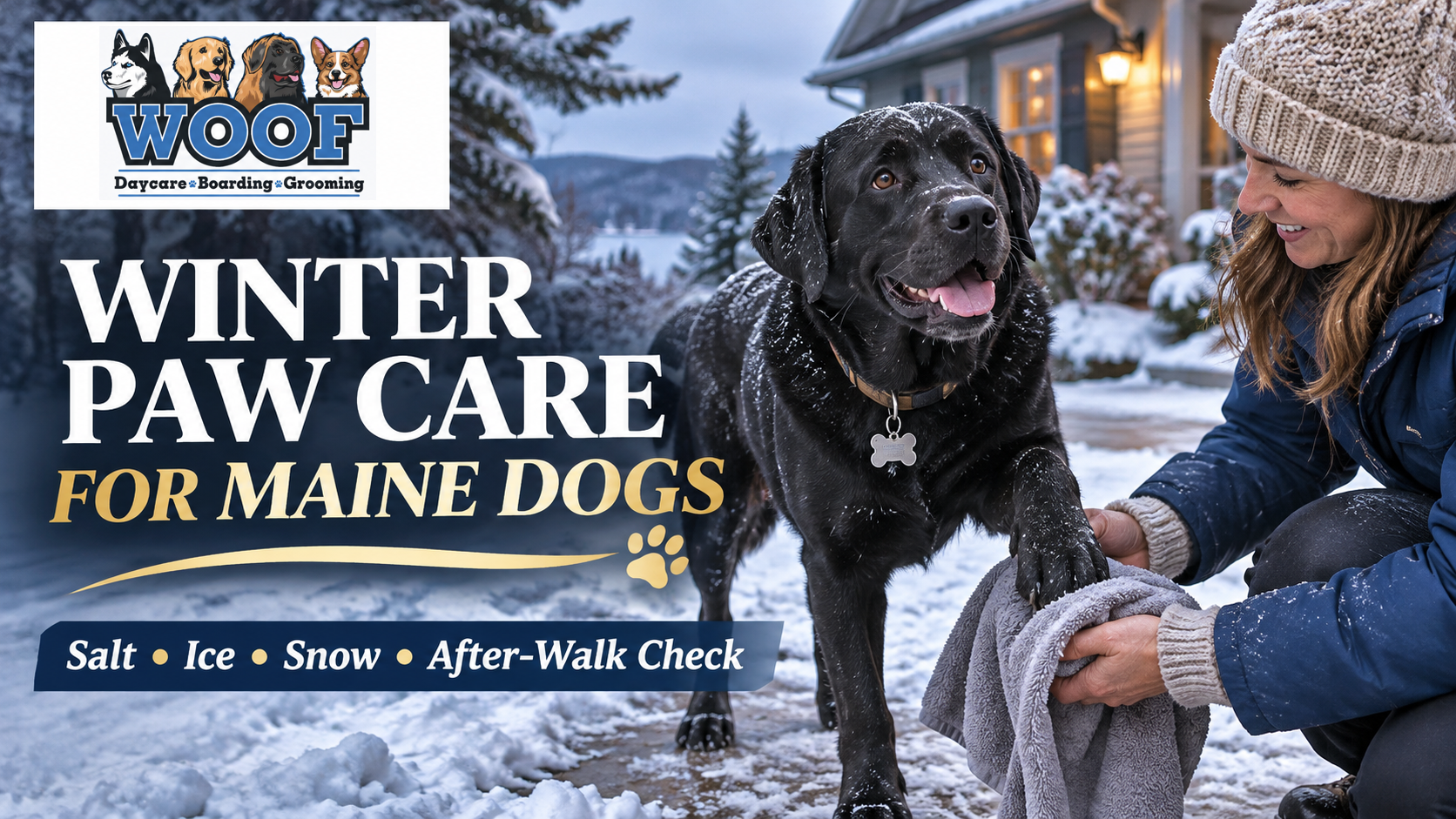
Pause at the door. Have a towel and a small container of lukewarm water ready.
Inspect each paw. Gently separate the toes to look for ice balls, grit, redness or a small cut.
Rinse away residue. Use lukewarm water to remove salt and deicer from the paws, including between the toes. Avoid harsh soap or very hot water.
Dry thoroughly. Pat pads and spaces between toes dry, especially after slushy walks.
Notice behavior. Excessive licking, limping or continued sensitivity after cleanup is a reason to contact a veterinarian.
Keep the cleaning routine calm and predictable. A reward and a familiar cue can help dogs who dislike paw handling. If your dog cannot tolerate the check, work in short sessions rather than restraining them forcefully.
What about ice balls in the fur?
Longer hair around the feet can collect small clumps of snow that harden as a dog walks. Those clumps may pull on the hair and make movement uncomfortable. Bring your dog into a warm room and let the ice soften; do not tug or cut blindly at hardened clumps close to skin. Grooming and careful trimming of excess foot hair, when appropriate for the dog's coat and needs, may reduce buildup.
Regular grooming is not simply about appearance. A grooming visit can help owners keep track of coat matting, nails and the condition of the feet. Groomers are not a substitute for veterinarians: unexplained sores, infection, swelling or pain should be assessed medically.
Are pet-safe ice melts completely safe?
No product label means that a dog should be allowed to lick or eat the material. Ingredients and irritation risks vary. Store deicing products securely, follow label directions and clean residues from paws. If a dog eats an ice-melt product or develops concerning symptoms after exposure, contact your veterinarian or an animal poison-control service promptly and have the product package available.
Daycare and boarding during messy winter weather
Winter changes the logistics of drop-off and pickup. Before a daycare visit or boarding stay, ask what the facility needs from you and how to share important care instructions. Mention any sensitivity to cold, paw irritation, difficulty with boots, mobility concerns or medication instructions. Keep emergency contact information current.
For dogs moving between home, car and daycare, a towel near the door and an extra few minutes for cleanup can make the transition more comfortable. Ask the care team how your dog handled outdoor breaks, activity and rest during especially cold or icy weather. Dogs benefit from an appropriate balance of activity, recovery and individual attention; not every dog needs the same schedule.
Common questions from Greater Bangor dog owners
Should I rinse my dog's paws after every salted walk?
Rinsing and drying paws after exposure to road salt or deicers is a sensible routine. Even if your dog shows no immediate discomfort, residue can remain between the toes and may be licked off later.
Can I use human hand lotion on cracked paw pads?
Do not assume that a human product is safe if licked. Ask your veterinarian which paw-care product is appropriate for your dog, especially if there is cracking, bleeding or ongoing irritation.
How do I know whether winter paw discomfort needs a veterinarian?
Seek veterinary advice for a persistent limp, bleeding, swelling, painful cracks, worsening redness, unusual discharge or signs of illness. Sudden severe symptoms warrant prompt care.
Can grooming help before the worst of winter arrives?
Yes. For some dogs, keeping nails appropriately trimmed, managing mats and maintaining the hair around the feet can make routine paw checks easier. The best approach depends on the individual dog's coat and health.
Thoughtful dog care, close to home
Woof, LLC provides dog daycare, boarding and grooming in Glenburn, serving families throughout the Greater Bangor area. Whether you are arranging weekday care, planning a trip or discussing grooming needs, sharing your dog's routine and sensitivities helps the team understand what makes that dog comfortable.
To discuss your dog's care, visit Woof, LLC. Good winter habits are built one walk, one paw check and one conversation at a time.
This article provides general pet-care information and is not veterinary advice. Consult your veterinarian about your dog's individual cold-weather needs or symptoms.